The excitement about implementing electronic medical records included the ability to template the entire visit, ensuring all boxes were checked and nothing was forgotten. The note would be complete and organized. What we learned after the fact is that, although the exam is documented, the findings are clear, and the plan follows logically, it can feel a little familiar.
Not necessarily identical to the last visit, but close enough to feel consistent. The phrasing is similar. The findings line up in a way that makes the note easy to read and even easier to sign. Why?
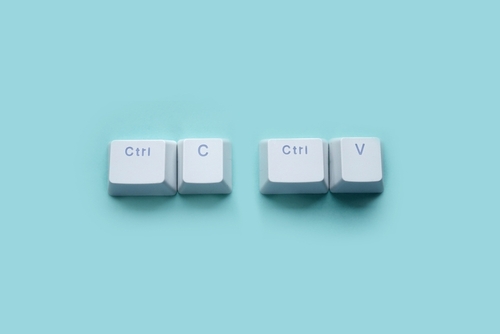
That familiarity stems from copy/paste, which has become deeply embedded in clinical documentation. It works efficiently and predictably, with just enough accuracy for the physician to complete and sign the note.
Until it doesn’t.
How Efficiency Became a Personality Trait
Copy/paste did not start as a documentation problem. It began as an “oh, look what we can do to save time!” More patients. More complexity. More required documentation. The same number of hours in the day. So the work processes were adapted. Pull forward the previous visit. Reuse what still applies and update what has changed. Keep the clinic moving.
Seems reasonable. Necessary, even.
But copy/paste isn’t really a tool issue. It’s a habit. And habits that save time tend to stick around long enough to become part of the culture. The note gets done faster. The documentation looks complete. No one calls it out. No one questions it.
Because nothing is obviously wrong, and when nothing is obviously wrong, no questions are asked. Next patient, please.
The Problem: It’s “Close Enough to Pass”
If pull forward and copy/paste created clearly incorrect documentation, this would be easy. Sadly, it doesn’t. Instead, it creates documentation that is almost right.
- A finding documented at the last visit, with no updates.
- A “no change” statement that reads confidently despite little to no evidence that it was rechecked.
- A plan that looks appropriate because it’s familiar, largely because it’s been carried forward rather than rethought.
Individually, the note reads well and makes sense. The clinical picture holds together. But over time, the note begins to tell a slightly different story. Not what was evaluated, but what was carried forward from prior documentation rather than newly evaluated.
And those are not the same thing. That distinction matters most to the one audience you’re not thinking about during the visit: the one reviewing it later.
When the Drift Starts During the Visit
This isn’t just an audit problem. It starts in real time. When documentation leans on what was already there, it subtly shifts how the encounter is captured. The note reflects continuity, but not always the decision-making. It supports the visit, but it doesn’t always explain it. And the explanation, or “why,” is terribly important.
In retina, where small changes drive big decisions, that gap matters. A carried-forward “stable” finding might be accurate. But did you assess stability today, or did the documentation assume it? Those look identical on paper.
And one of them is much harder to defend. Guess which.
The Illusion of Consistency
Consistency in documentation sounds like a compliment. However, it is a game of semantics.
Consistent clinical findings? That’s medicine. Consistent wording, identical phrasing, and unchanged exam language across multiple visits? That’s something else: cloned documentation.
It raises questions no one wants asked:
- Why was the patient seen?
- Why were the findings the same as the last time?
- Is there medical necessity documented?
Retinal findings are not typically static. Fluid shifts. Anatomy changes. Response evolves. Sometimes subtly, sometimes not.
When documentation leans too heavily on copy/paste, that variability gets diluted. The nuance disappears. The differences between visits (the reason for the visit) become harder to see.
What remains is a note that is technically complete, but not entirely accurate.
How It Becomes Invisible
No one wakes up and decides to stop documenting the actual visit.
There’s no dramatic turning point—it’s smaller than that.
A phrase reused here.
A finding carried forward there.
A template that works a little too well.
And then:
Copy/paste becomes standard.
Standard becomes normal.
Normal becomes invisible.
Once it’s invisible, it’s no longer questioned because, from the inside, everything still looks “right.”
That’s the problem.
What the Note Is Actually Supposed to Do
The issue isn’t whether the note is complete, but whether it’s specific to the patient on that day. Not whether it reads well, but whether it reflects what actually happened during the encounter and demonstrates the reasoning behind it.
Because documentation is the only place your clinical reasoning exists outside your head. And when that reasoning is implied rather than shown, it becomes very easy for someone else to reinterpret it later, usually not in your favor.
A Final Thought
In retina, the differences between visits matter more than the similarities, and pull-forward or copy/paste doesn’t eliminate those differences. It just makes them harder to see.
Over time, a note that consistently looks “right” can drift farther from what actually happened, without anyone noticing when the shift occurred.
If your notes feel consistent, that’s usually when we start asking questions. “Consistent” and “carried forward” can look identical, right up until someone looks closely.
We help you see the difference before anyone else does.
Because “we’ve always done it this way” is not a compliance strategy. Mastering Retina Documentation & Coding: From Exam to Claim
👉 https://course.elizabethcconsulting.com/

.png)